
Input VAT Deduction: Key Conditions and Common Risks
Input VAT deduction can reduce VAT payable, but the right does not arise automatically from every invoice. Registration, documentation, the underlying supply and business use all matter.
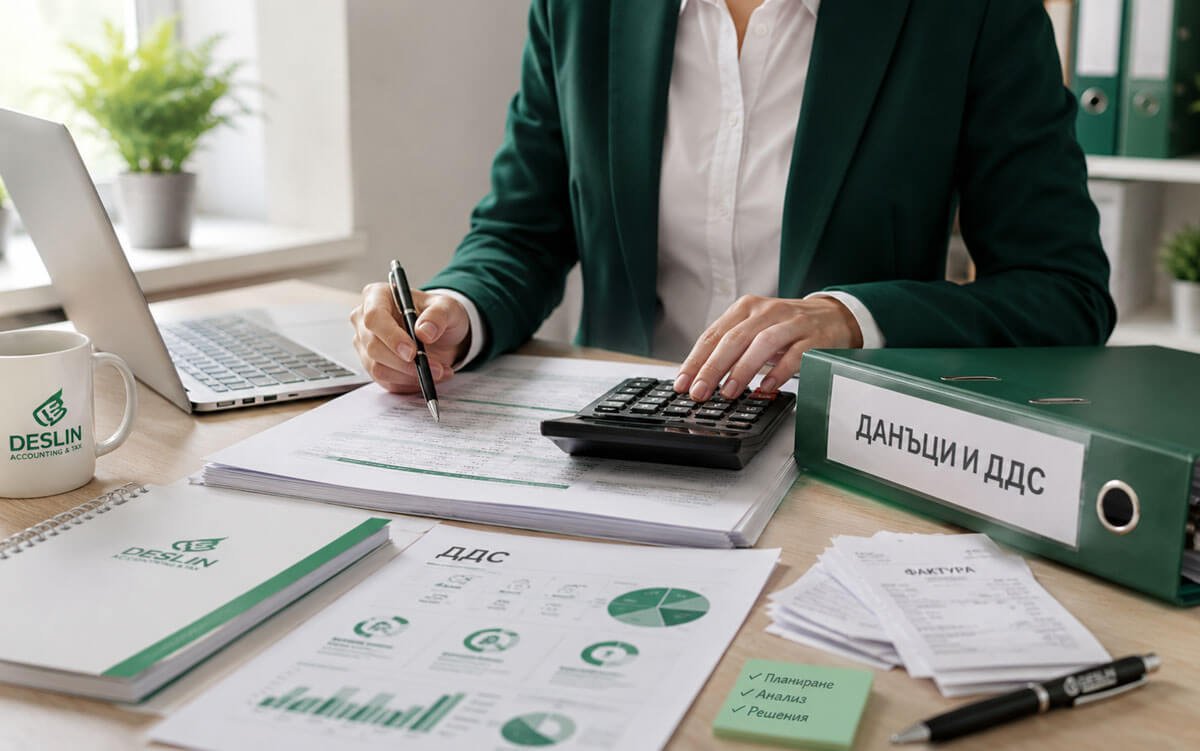
One of the most important issues for VAT-registered businesses is the right to deduct VAT on supplies received. A common practical mistake is to assume that every invoice showing VAT automatically creates a right to deduct input VAT. The legislation imposes conditions, and during inspections the authorities consider not only the documents but also the underlying economic reality.
What is input VAT deduction?
Input VAT is the VAT charged on purchased goods, received services or certain advance payments which a registered taxable person may be entitled to deduct from its VAT liabilities when the statutory conditions are met.
What are the main conditions?
As a general rule, several elements need to be considered together:
- the person must hold a VAT registration that gives the right to deduct input VAT;
- the required tax document must be available — for example an invoice, customs declaration or protocol, depending on the circumstances;
- VAT must have been charged in accordance with the rules for a taxable supply;
- the goods or services received must be used for subsequent supplies that give rise to a right to deduct;
- there must be no specific statutory restriction applying to the particular expenditure;
- the right must be exercised within the permitted period.
The Bulgarian National Revenue Agency states that where the right exists, under the general rule it may be exercised in the tax period in which it arises or in one of the following twelve tax periods by recording the relevant document correctly.
Is an invoice enough?
An invoice is a key document, but it does not replace evidence that a genuine business transaction has taken place. For significant or unusual supplies, it is good practice to retain contracts, acceptance certificates, correspondence, transport documents, payment evidence and other records showing what was actually supplied.
Where do risks commonly arise?
Private or mixed-use expenditure
Where an asset or service is used both for business purposes and for purposes that do not give rise to a right of deduction, a restriction, proportional deduction or subsequent adjustment may be required.
VAT charged incorrectly
The presence of a separate “VAT” line on an invoice does not automatically mean that the tax has been charged correctly. Reverse charge supplies, exempt supplies and special VAT schemes require different analysis.
No clear connection with taxable business activity
The company should be able to explain the business purpose of the purchase and its connection with its economic activities.
Late or incorrect recording
Documents need to be included in the correct VAT ledgers and tax periods. Accumulating unprocessed documents increases the risk of omissions and later corrections.
How can you reduce the risk?
Introduce a review process for significant purchases and unusual transactions. It is usually easier to clarify the VAT treatment before a contract is signed than after invoices have been issued and payments have been made.
For complex cases, DESLIN provides VAT Consulting covering input VAT deduction, international transactions and specific VAT regimes.
This material is for general information only and is current as of 21 August 2026. The right to deduct input VAT depends on the specific supply and the applicable provisions of the Bulgarian VAT Act.
Related articles
VAT Registration in Bulgaria in 2026: €51,130 Threshold, Deadline and Key Rules
The rules for mandatory VAT registration changed from 1 January 2026. The main national threshold is €51,130 and turnover is monitored throughout the current calendar year.
Read articleVIES Return: When It Is Filed and Which Transactions Are Included
The VIES return forms part of VAT reporting for certain cross-border EU transactions. See which operations can trigger it and why the data must reconcile with the other VAT records.
Read article