
Markets and Countries
Selling exclusively in Bulgaria, to customers elsewhere in the EU or to third countries can involve different accounting and tax considerations.
SERVICE
DESLIN provides accounting services for online stores and e-commerce businesses, tailored to their markets, sales channels, payment methods and applicable accounting, VAT and fiscal requirements.

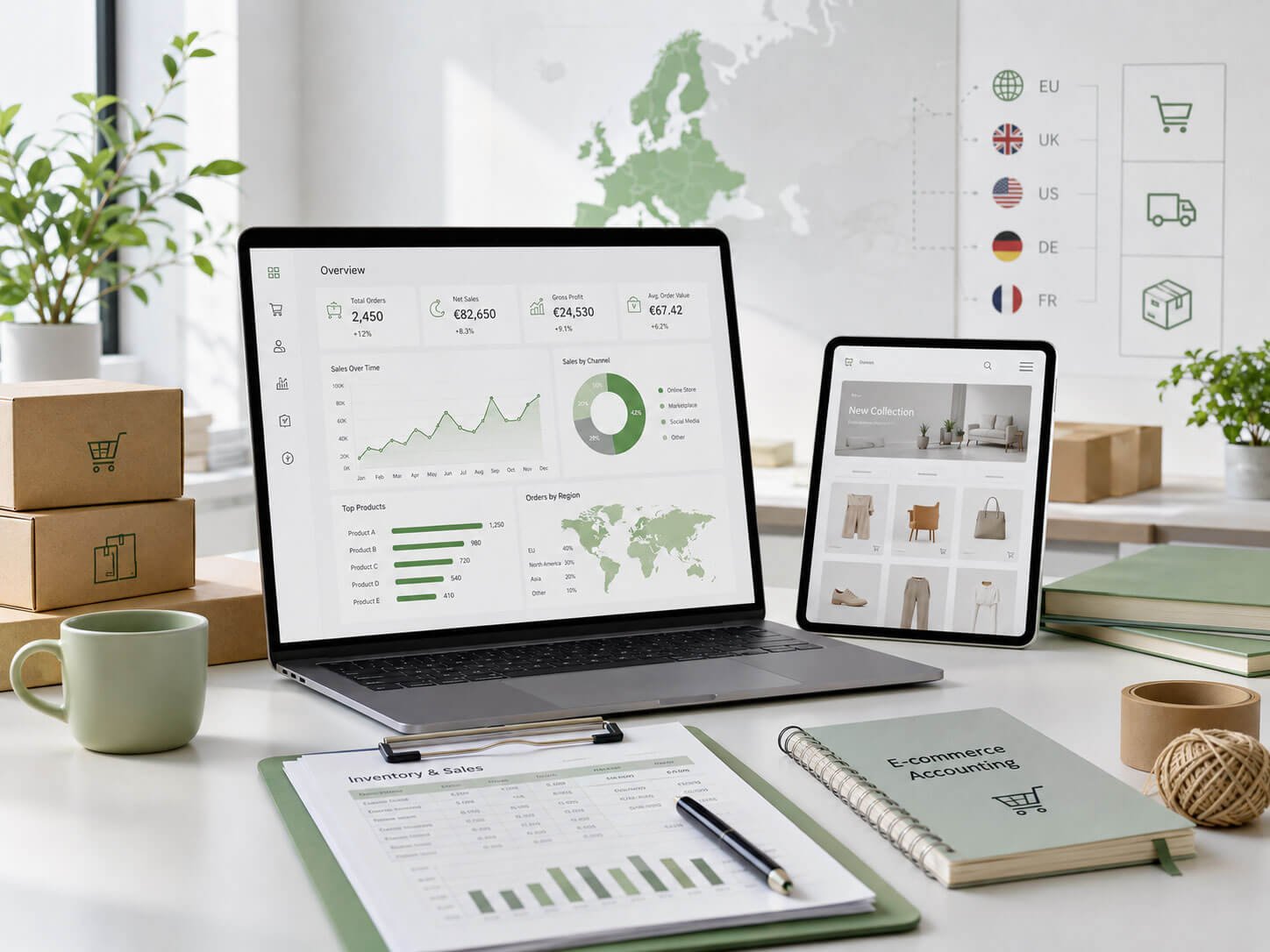
E-commerce allows businesses to reach customers through different sales channels and markets and to grow quickly. This flexibility, however, also creates accounting, tax and reporting requirements that need to be organised properly from the very beginning.
When accounting for an online store, it matters where the goods are purchased, whether they are manufactured by the business, who the customers are and where the sales take place — in Bulgaria, elsewhere in the European Union or in third countries.
The sales model, payment methods, inventory management and whether the business operates exclusively online or combines an online store with physical retail can also affect the accounting organisation.
DESLIN adapts the accounting service to the specific e-commerce model so that sales, payment flows and applicable tax requirements are considered as parts of one coordinated process.
Two online stores may look similar to their customers while operating under very different accounting and tax models. That is why the service should begin with understanding how the business actually makes its sales.
Selling exclusively in Bulgaria, to customers elsewhere in the EU or to third countries can involve different accounting and tax considerations.
It matters whether you sell through your own online store, marketplaces, a physical retail location or a combination of several sales channels.
Card payments, virtual POS solutions, cash on delivery, postal money transfers and other payment channels require the revenue reporting process to be organised correctly.
Where physical goods are sold, their origin, method of acquisition or production and the organisation of inventory records all need to be considered.
Depending on the business model, different VAT rules, requirements under Ordinance No. N-18 and special e-commerce VAT schemes may be relevant.
Reliable accounting requires the different sources of data generated by an online business to be organised and reviewed consistently.
We organise the accounting treatment of sales according to the channels through which the business reaches its customers.
We consider how payments are received through banks, payment service providers and virtual POS solutions.
The way these payments are received and documented forms part of the correct organisation and reporting of online sales revenue.
Where the business sells physical goods, the accounting organisation also needs to reflect the movement and reporting of inventory.
For sales outside Bulgaria, we consider the applicable VAT treatment and whether a specialised analysis or VAT scheme may be required.
Depending on the sales, payment and reporting model, specific requirements may apply to the online store, including the submission of information or a standardised audit file where applicable.
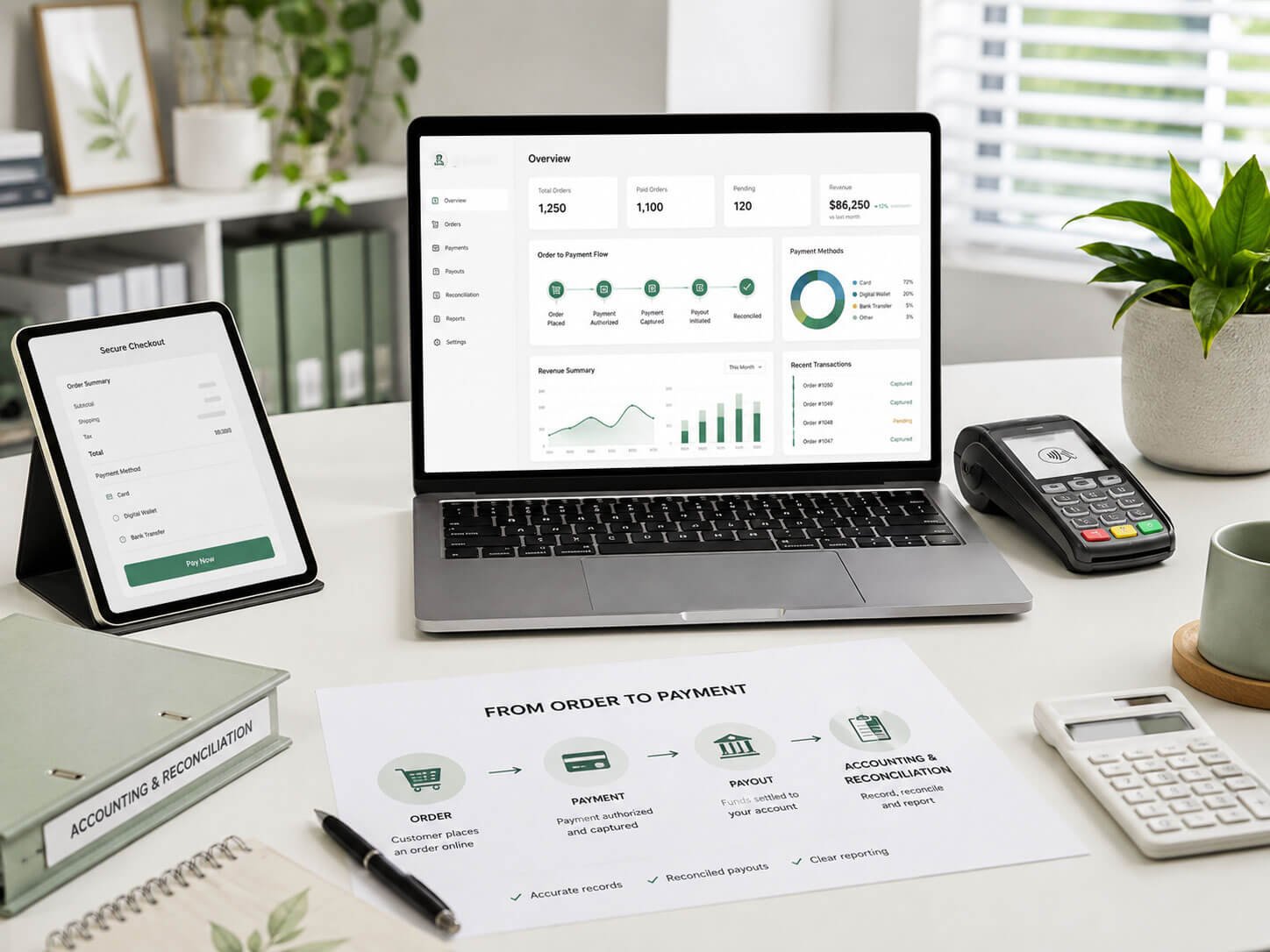
One of the key aspects of e-commerce accounting is the timely and accurate recording of revenue received through different payment channels.
An online business may use solutions such as Stripe, PayPal, Amazon Pay, Apple Pay, Google Pay, BORICA Virtual POS, myPOS, SumUp and virtual POS services provided by different banks.
When several payment methods are used at the same time, the accounting process should make it possible to consistently reconcile the amounts received with the corresponding sales and orders.
That is why the payment model is one of the areas that should be clarified when organising the accounting processes of an online store.
Our approach begins with the actual business model rather than a predefined accounting template.
We establish what you sell, where the goods or services originate, which markets you operate in and which channels you use to reach your customers.
We review the payment methods used, how revenue is received and how individual payment flows relate to the underlying sales.
We organise the process with the relevant accounting, VAT and fiscal requirements in mind and identify special regimes that may need further consideration.
We establish a consistent process for accounting for sales, payments and the other transactions generated by the online business.
E-commerce often combines multiple sales channels, payment systems, markets and delivery methods. The origin of the goods, inventory organisation, applicable VAT treatment and requirements for recording sales may also be relevant. These elements need to be considered together when organising the accounting process.
Yes. Card payments, virtual POS solutions, bank and payment service providers, cash on delivery and postal money transfers may require different approaches to documentation and accounting. Payment methods should therefore be considered as part of the overall operating model of the online store.
Sales to customers in other EU Member States can create specific VAT obligations depending on the type of transaction and the business model. Where applicable, the OSS or IOSS schemes may form part of the solution, and DESLIN provides a separate specialised OSS/IOSS service for these matters.
Depending on the way sales are made, payments are received and transactions are recorded, requirements under Ordinance No. N-18 may apply to an online store. The specific situation should be reviewed in relation to the payment methods used and the way sales are registered and reported.
Under certain methods of registering and reporting online sales, Ordinance No. N-18 provides for the submission of a standardised audit file to the National Revenue Agency containing information about orders and completed supplies. This requirement does not automatically apply to every online store and should be assessed according to the specific reporting model used by the business.
Yes. DESLIN works with businesses using Shopify, WooCommerce, Amazon, eBay, Etsy and other e-commerce platforms, with the accounting and tax service organised according to the specific characteristics of each business model.
Tell us how you sell, which markets you operate in and how your customers pay. We will discuss the accounting organisation and the tax and reporting requirements relevant to your e-commerce model.