
E-commerce Accounting: How to Organise Sales, Payments and Documents
An online store may use many sales and payment channels, but accounting needs to bring them together into one verifiable picture. The key is linking each order, payment and document.
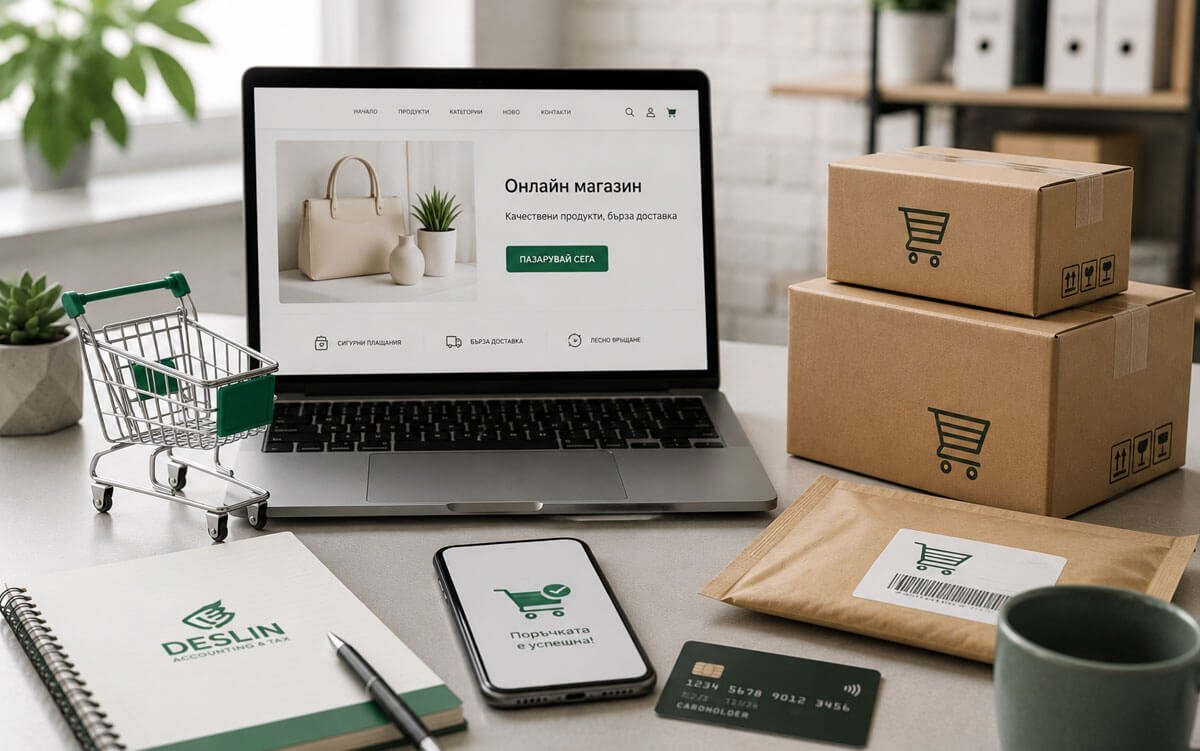
In e-commerce, the problem is rarely a lack of data. More often, the data is spread across too many systems: the online store platform, courier services, bank accounts, virtual POS, payment service providers, marketplaces and inventory software. The accounting process needs to connect all of these sources without losing individual orders, fees or refunds.
Start with the flow of a single order
For every sale, it should be possible to trace the logical connection:
order → fulfilment → payment → document → accounting entry → possible return.
If one of these stages remains only in an external system and never reaches accounting, discrepancies will accumulate as the business grows.
Separate the payment methods
Cash on delivery
Courier reports should be reconciled with dispatched and returned shipments and with the amounts actually transferred. It is important to distinguish between the selling price, fees withheld and the net amount received.
Card and digital payments
Payment service providers often transfer a consolidated net amount after deducting fees. Accounting should record the gross sale, the fee and the actual payment separately rather than treating the bank receipt as the entire revenue amount.
Marketplace platforms
When selling through an external platform, it is important to understand who the contractual counterparty is, which commissions are withheld, whether advertising or logistics services are involved and from which country those services are invoiced.
Returns are part of the normal process
E-commerce businesses deal with refused deliveries, returned goods, partial refunds and chargebacks. These need to be linked to the original sale and reflected consistently in inventory, payments and tax documents.
VAT does not depend only on where the website is based
For sales to customers in other countries, the type of customer, location of the goods, destination country and overall supply model all matter. For B2C sales within the EU, the distance-selling rules and OSS may apply, while IOSS may be relevant to certain low-value imported goods.
What information should accounting receive?
- an order export containing a unique order number;
- fulfilment and return status;
- courier reports;
- payment service provider reports;
- invoices for fees and commissions;
- customer-country information for international sales;
- inventory movement data.
Automation is useful, but controls are still necessary
Integrations reduce manual work, but an incorrect configuration can multiply the same error across thousands of orders. Regular controls are therefore essential: total order count, turnover by channel, receipts by payment provider and unresolved differences.
DESLIN provides specialised E-commerce Accounting tailored to the company’s sales channels, payment flows and international operations.
This material is for general information only and is current as of 21 August 2026. Fiscal and VAT requirements depend on the specific sales and payment model.
Related articles
OSS for Online Stores: When It Applies and How It Works
OSS allows online sellers to report VAT on certain B2C sales across the EU through one Member State instead of maintaining separate VAT registrations solely for those supplies.
Read articleIOSS for Imported E-commerce Sales: How the Scheme Works for Consignments up to €150
IOSS is a special VAT scheme for certain distance sales of goods imported from third countries and supplied to consumers in the EU in consignments not exceeding €150.
Read article